The over-exploitation of whales and the need for global regulation of the whaling industry was recognised as early as the 1920s, but the first actions taken to manage the intense competition between fleets and nations imposed only limited restrictions.
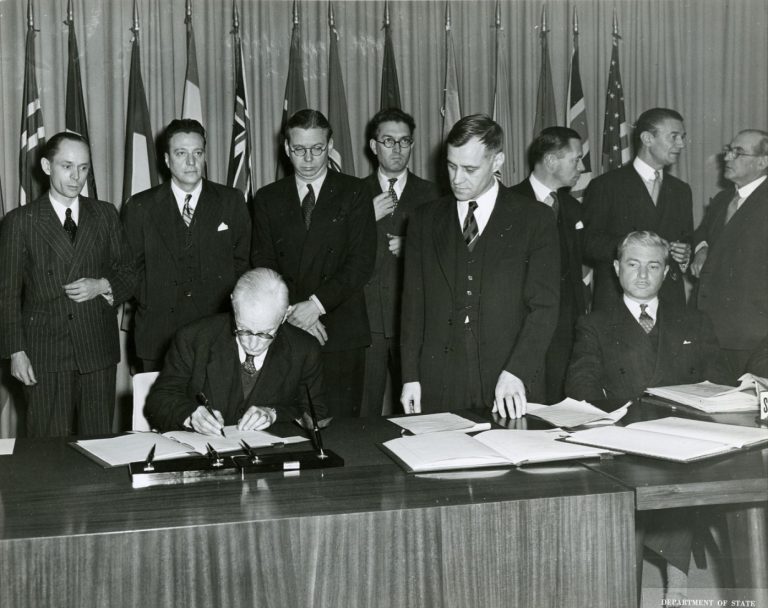
In 1946, 15 whaling nations signed the International Convention on the Regulation of Whaling (ICRW), thus agreeing to a binding global management and conservation regime.
Signing of the International Convention for the Regulation of Whaling in 1946
The Establishment of the IWC
The International Whaling Commission (IWC) was established to implement the ICRW, although its early regulations were mainly ineffectual and over-exploitation continued.
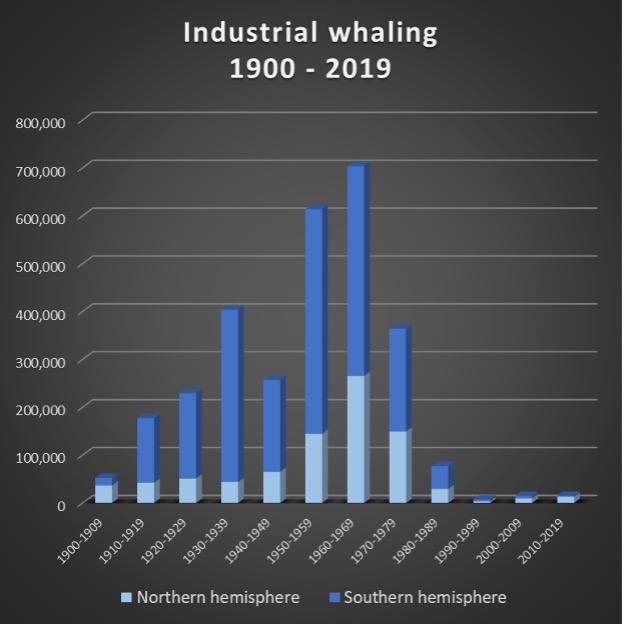
After commercial whaling peaked in the 1960s, when countries killed more than 700,000 whales, the IWC began to protect the most impacted species and reduce catch quotas for others.
The Convention on International Trade in Endangered Species of Wild Fauna and Flora (CITES), which came into force in 1975, followed the IWC’s lead and prohibited international trade in the species the IWC had protected from commercial whaling.
Source: Rocha, R.C, Clapham, P.J., Ivashchenko, Y.V. (2015) Emptying the Oceans: A Summary of Industrial Whaling Catches in the 20th Century
The 1986 Moratorium on Commercial Whaling
In 1982, Contracting Governments to the 34th annual meeting of the IWC in Brighton, UK voted by 25 to seven to set zero catch limits for the killing for commercial purposes of whales. This pause or ban on commercial whaling is commonly known as the moratorium. It was implemented in 1986 and, in combination with CITES’ prohibitions on international trade, effectively ended the mass slaughter of whales.
Over the past 40 years, multiple resolutions have reaffirmed the IWC’s commitment to the moratorium on commercial whaling and multiple attempts to overturn the moratorium, led primarily by Japanese representatives, have been rejected. During this time, despite a blocking minority of pro-whaling countries, the IWC has developed a comprehensive programme of scientific and conservation-oriented work to address the key challenges facing whales and other cetaceans today, including bycatch, climate change, vessel strikes and chemical, noise and plastic pollution.
Challenges to the Moratorium and Japan's Departure
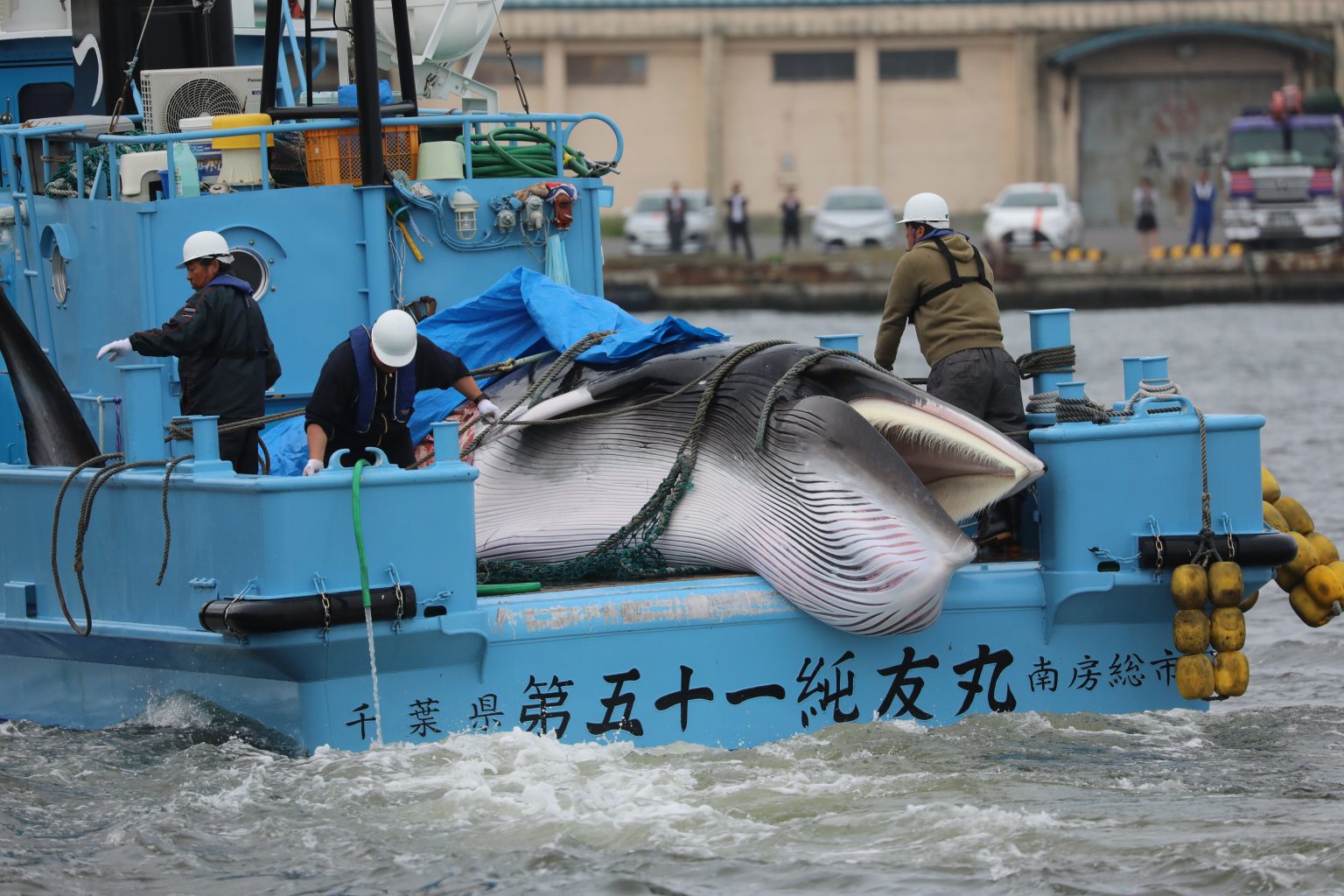
In 2018, the IWC rejected Japan’s proposal to renew commercial whaling and instead adopted the Florianópolis Declaration (IWC Resolution 2018-5), which reaffirmed the importance of maintaining the moratorium and stated that the IWC’s role in the 21st century includes its responsibility “to ensure the recovery of cetacean populations to their preindustrial levels”. In response, Japan left the IWC in 2019 and resumed commercial whaling outside the authority and oversight of the IWC.
Despite Japan’s departure from the IWC, it continues to wield considerable influence within the Commission, as suggested by a number of resolutions supporting commercial whaling proposed and supported by non-whaling states. At IWC 9 in 2024, Antigua & Barbuda’s representative tabled a draft resolution aimed at lifting the moratorium and developing the whaling industry, despite a lack of support for commercial whaling in the country. Although the proposal was ultimately withdrawn, pro-whaling countries were again successful in blocking a proposal to establish a South Atlantic whale sanctuary, which has been repeatedly tabled by the governments of Brazil, Argentina, South Africa and range states since 1998. In 2024, the proposal missed the three-quarter majority required to adopt the sanctuary by just one vote, with the following contracting governments voting against its establishment: